

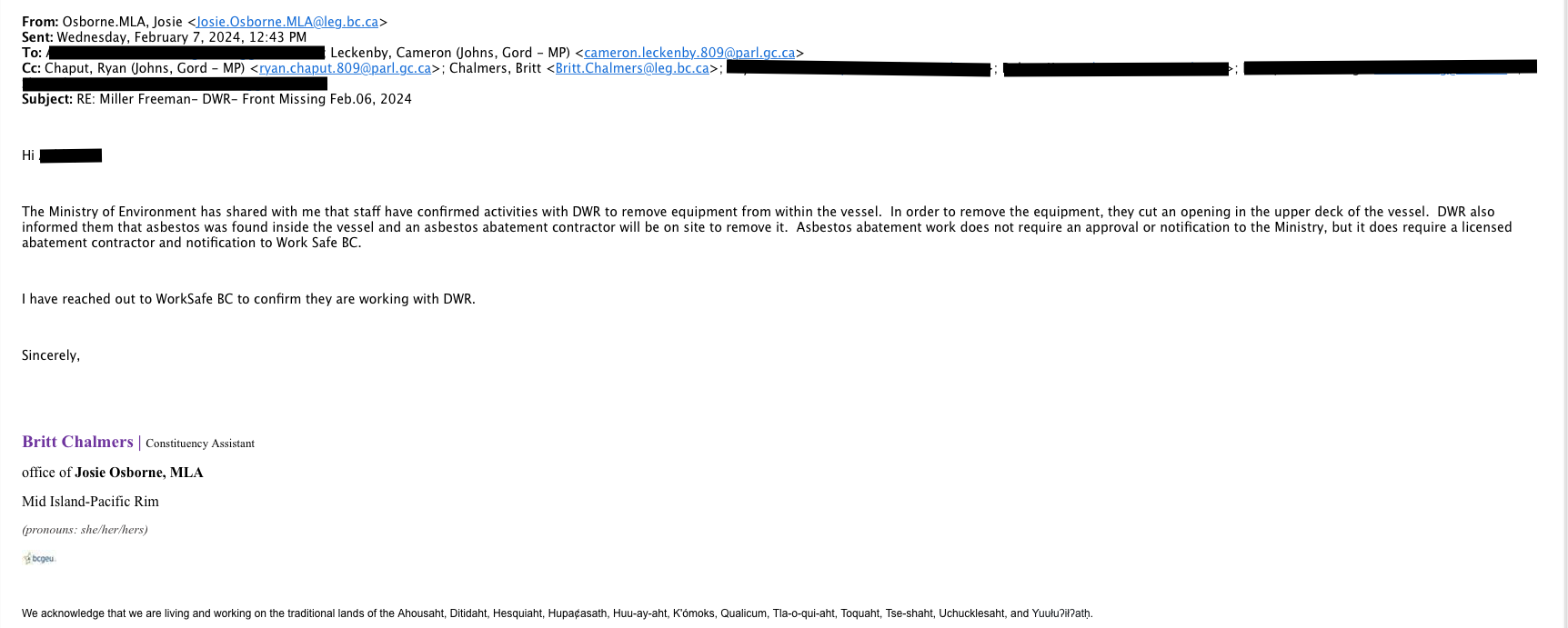
Authorities charged with protecting and enforcing existing rules and regulations continue to fail the Canadian citizens in favour of this foreign owned company to ship break on the foreshore. Supposedly gave permission for a hole to be cut, and of course to DWR that means the green light to do what they want.
Those in power could fix this problem but they won’t because they screwed up and this company should not be operating – should never have been given permission to even start this type of operation in an environmentally sensitive area. Now the gov’t is tossing the blame back and forth.
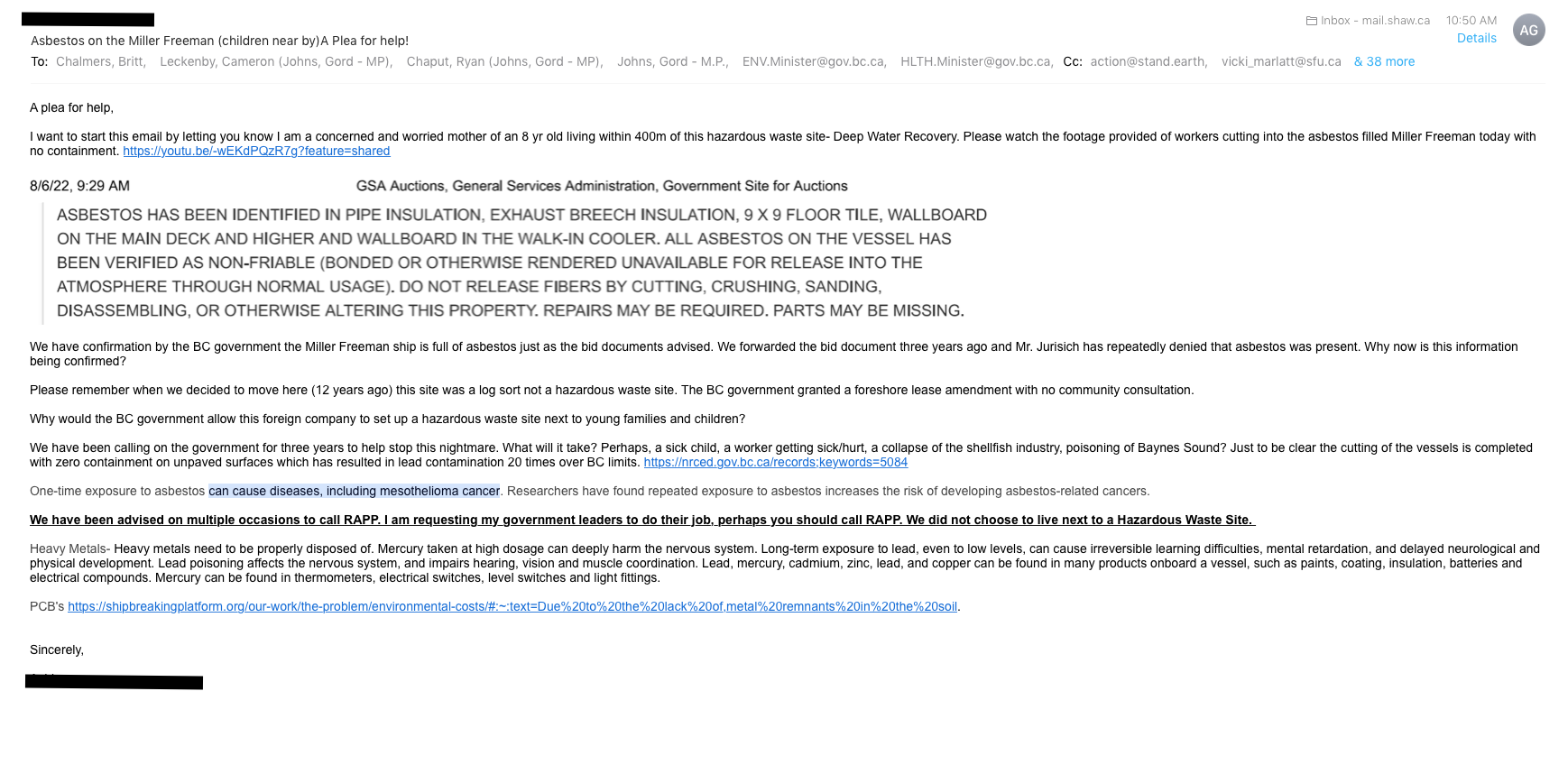
Once word gets out about the contamination freely flowing into the ocean and permeating the soil at DWR site – how many people are going to want to eat the famous oysters from Baynes Sound? I’d certainly advise against it.
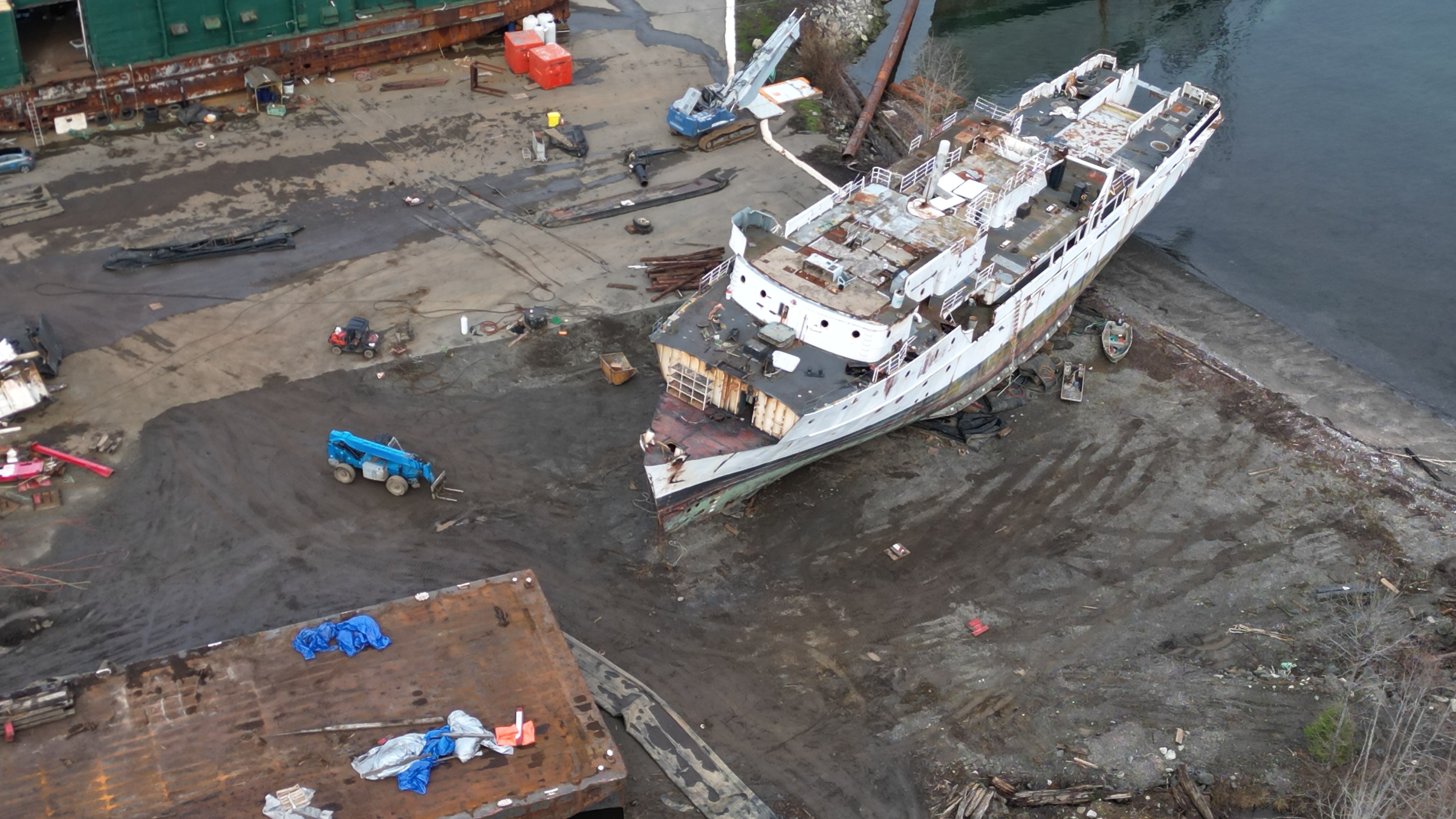
After all the bullshit Jurisich spouted over the last 3 years about the Miller Freeman not containing asbestos – surprise – even DWR NOW admits that the vessel contains asbestos.
THE ENVIRONMENTAL COSTS
In addition to taking a huge toll on the health and lives of workers, shipbreaking is a highly polluting industry. In South Asia, ships are grounded before they are pulled and broken apart on tidal mudflats. On these once pristine beaches, coastal ecosystems and the local communities depending on them are devastated by toxic spills and other types of pollution caused by the breaking operations. As long as shipbreaking is done by way of beaching, the environment will suffer.
The beaches of Chattogram, Alang-Sosiya and Gadani are toxic hotspots. Because ship owners rarely provide the necessary documentation of the hazardous materials that are built in the ship’s structure, no precaution is taken when removing them from the ships. Due to the lack of proper waste reception facilities, the toxics are dumped on the spot and contaminate the beach sands and sediments. The scraps from the ships, stacked on the seashore, contribute to the accumulation of rust and metal remnants in the soil. In India, the concentration of heavy metals in the Alang-Sosiya area is twenty times higher than the Indian average.
Currents and tides distribute the pollutants not only along the coast, but also further away from the beach during the monsoon season. This causes serious environmental harm with long-term effects for occupational, public and environmental health. Oil residues are mixed with seawater, causing serious damage by reducing light intensity beneath the water surface. Pollutants affect the growth of marine biodiversity and alter permanently the physiochemical properties of the coastal habitat. Dozens of aquatic species have been killed, destroying the livelihoods of surrounding fishing communities. According to the Marine Institute of the University of Chittagong in Bangladesh, the shipbreaking industry is responsible for wiping out 21 species of fish and crustacean, and endangering 11 other species.
Blow-torch cutting through layers of paints that contain heavy metals and other toxics pollutes the air and exposes workers to toxic fumes. Burning of cables and release of ozone depleting substances also cause air pollution. In South Asia, the re-rolling of steel is preferred to smelting. Whilst the first is less energy consuming, the release of toxic fumes when steel plates covered with paints are not heated at high temperatures is yet another source of serious pollution.
 allthingsunionbay