

https://www.youtube.com/results?search_query=fanny+bay+oyster+recall
Arbour said (video below) if UBE couldn’t contribute the $15 to $20 Million, the project wouldn’t proceed. Why is he providing a quote only mentioning Komoks First Nation? When is he going to come clean and tell the landowners what the hell is really going on? Also, Arbour needs to provide the report that states 50 per cent have failed septic fields.
Arbour says 50 per cent of homes have failed septic fields but the group is trying to address that.
“We have a big project with K’ómoks First Nation to bring sewage down to Union Bay and Royston and basically have connected systems to a sewer treatment plant,” said Arbour.
Rains have played role in Baynes Sound seafood harvesting closures
A federal government sign is shown at Fanny Bay, B.C. (CHEK News)
Several seafood products including an oyster brand from Fanny Bay Oysters, grown in Baynes Sound off Vancouver Island, are currently being recalled.
The recall came just days after the BC Centre for Disease Control reported a spike in “norovirus-like gastrointestinal illness” that has been linked to raw oysters.
Baynes Sound has partial bans or complete closures on harvesting shellfish and it’s where nearly 40 per cent of B.C.’s oysters are harvested.
A number of the bans were issued in November after people who ate the oysters started getting sick.
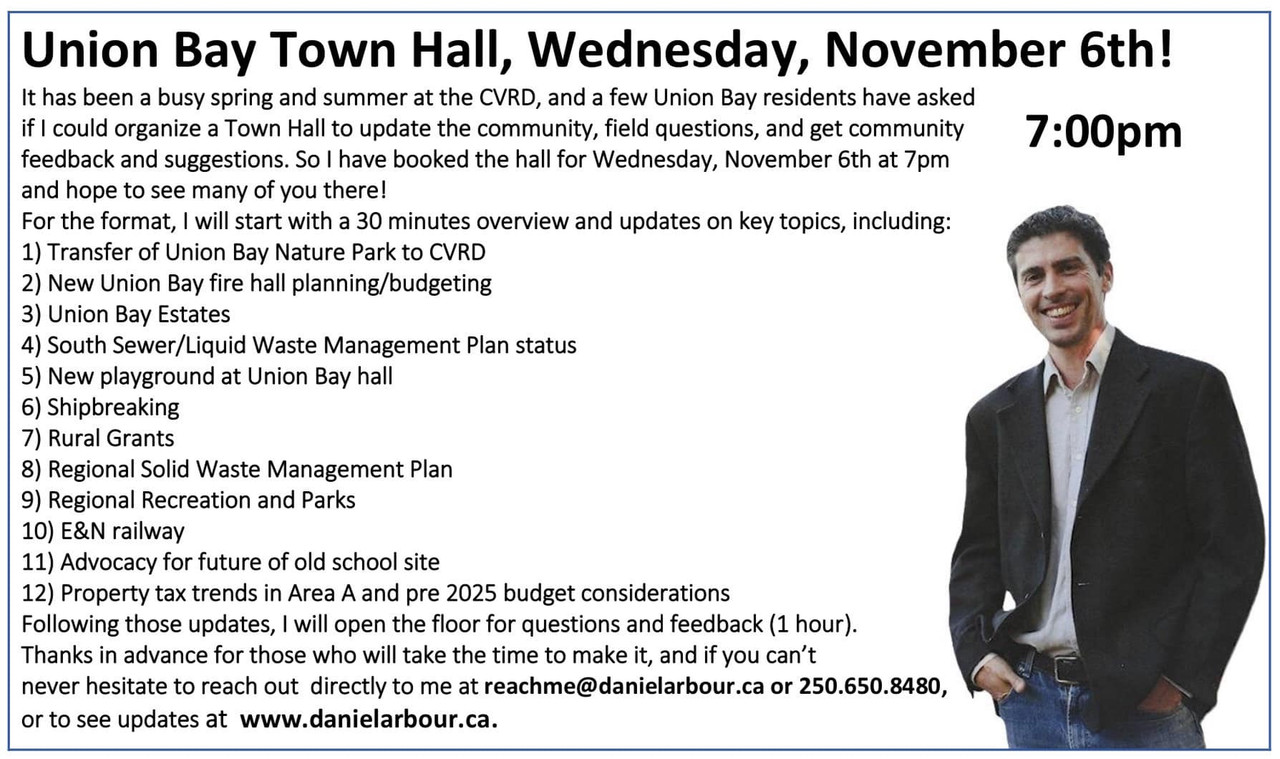
“It’s a significant concern to everyone in Baynes Sound including the industry but also residents. A norovirus outbreak is never good and neither are people getting sick,” said Daniel Arbour, a director with the Comox Valley Regional District.
Watch the report below:
A society that works to keep B.C.’s waters clean says the heavy rains this fall have played a role.
“This year we’re getting a little bit more contamination because of these very dry spells then these heavy freshets of rains,” said John Roe, a director with the Dead Boats Society.
“You look at October and look at a number of sewage plants that overflowed into the Fraser. All that adds bacteria and contaminants in the waters that eventually creep over to Baynes Sound. The Fraser River has a huge impact on Baynes Sound.”
Roe said there’s also an issue with septic fields surrounding Baynes Sound.
“You’re supposed to test and sample and clean your septic tank on an almost biannual basis sort of thing and it’s not done very often and it’s certainly not enforced,” he said.
Roe says liveaboards on boats can also have a big impact. A CHEK News viewer says she has complained to authorities about liveaboards and derilect vessels in Baynes Sound for three years with little to no action.
In a statement, the BC Shellfish Growers Association says the industry is a victim and “for years, government authorities have been aware of potential contamination sources, such as sewage leaking into the environment. However, rather than addressing the root causes of contamination, the approach has been to close the industry when issues arise. We urge government agencies to collaborate with us on long-term solutions…”
Arbour says 50 per cent of homes have failed septic fields but the group is trying to address that.
“We have a big project with K’ómoks First Nation to bring sewage down to Union Bay and Royston and basically have connected systems to a sewer treatment plant,” said Arbour.
That project is not slated to start until 2027.
Arbour says he believes Island Health and the province should have a special management zone around Baynes Sound and both need to play a larger role in monitoring and enforcing issues that arise.
 allthingsunionbay