

‘The message is out that the civil courts should not be used to suppress the right to free expression unless there is a solid overriding reason to do so,’ lawyer says.
By Madeline Dunnett, Local Journalism Initiative Reporter ● Comox Valley ● November 19, 2025
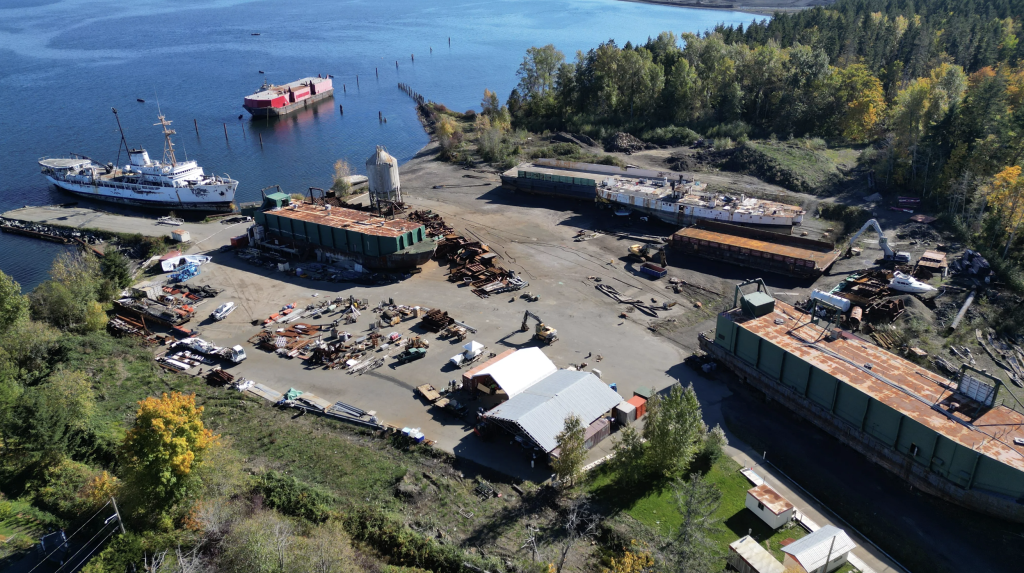
After a more than three-year-long legal battle, a Union Bay woman has been awarded hundreds of thousands of dollars in legal fees to be paid by shipbreaking company Deep Water Recovery.
Mary Reynolds has been using her drone to film the company’s operations in Union Bay since its early days. She is among many residents in Union Bay and surrounding areas criticizing the company for its operations in an ecologically sensitive area.
Union Bay locals await next steps after controversial shipbreaking lease cancelled
Reynolds filed a civil claim against the company in 2022, citing harassment and intimidation from Deep Water Recovery and its operations manager, Mark Jurisich.
Earlier that year, Jurisich snatched her drone from the air and took it while she was trying to land it near her vehicle which was parked at the Union Bay Community Hall, according to the civil claim. It was later returned, but it had been damaged, was lacking files and a memory card and was inoperable, according to Reynolds’ civil claim.
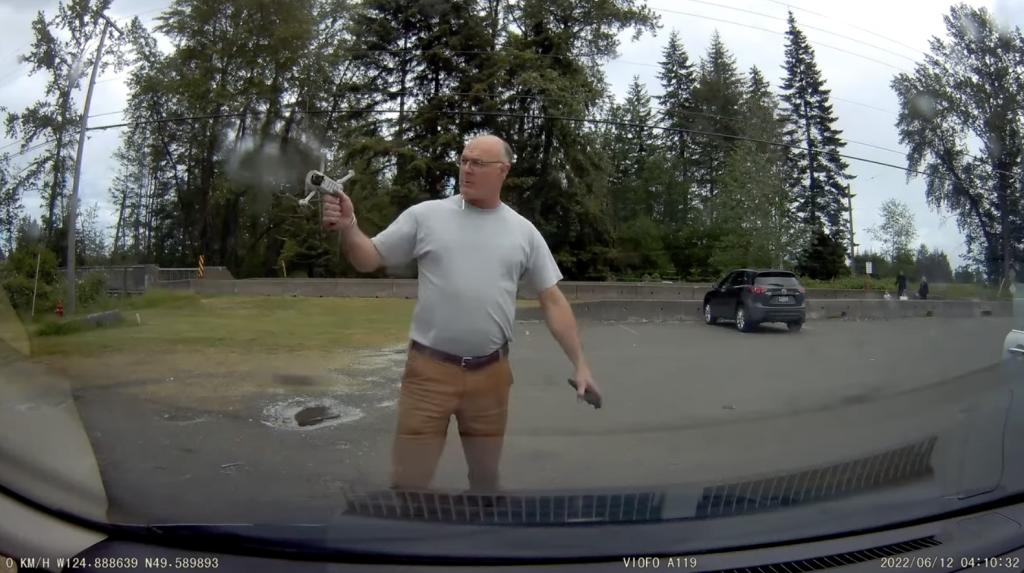
The company responded and filed a counterclaim in July 2022, accusing her of trespassing and engaging in a “malicious campaign” against the company.
Reynolds told The Discourse in a previous story that after Deep Water Recovery’s response, she “disseminated the images and recordings collected [by her drone] to third parties,” and that her lawyer, Jason Gratl, put in an application under the Protection of Public Participation Act (PPPA).
The act is in place with an aim to protect those who may be silenced from strategic lawsuits against public participation, commonly known as SLAPP suits. The application Gratl filed is considered an Anti-SLAPP motion, asking the court to dismiss Deep Water Recovery’s counterclaim.
Factoring in legal fees and the years it took for the application to be heard, Reynolds racked up significant legal costs.
This summer, the company was ordered to pay $165,000 towards the cost of the PPPA application. Gratl told The Discourse Deep Water Recovery also owes approximately $5,000 for the cost of the Court of Appeal process, and agreed on a settlement with Reynolds to provide another $40,000 in claims instead of going to trial.
Jurisich also issued an apology letter to Reynolds.
Reynolds is grateful for the coverage of the legal fees, and told The Discourse she’s grateful for her lawyer, Jason Gratl.
“He is such a champion of free expression for the little guy,” Reynolds said.
Discourse reporter Madeline Dunnett reached out to Jason Gratl to learn more about what amounted to a big moment for Anti-SLAPP legislation.
This interview has been lightly edited for grammar and flow.
Madeline Dunnett: Can you summarize this case for our readers? What happened?
Jason Gratl: Mary Reynolds has a practice of asserting her rights, including her rights to fly drones and monitor industrial operations in her neighbourhood and express herself in person and online.
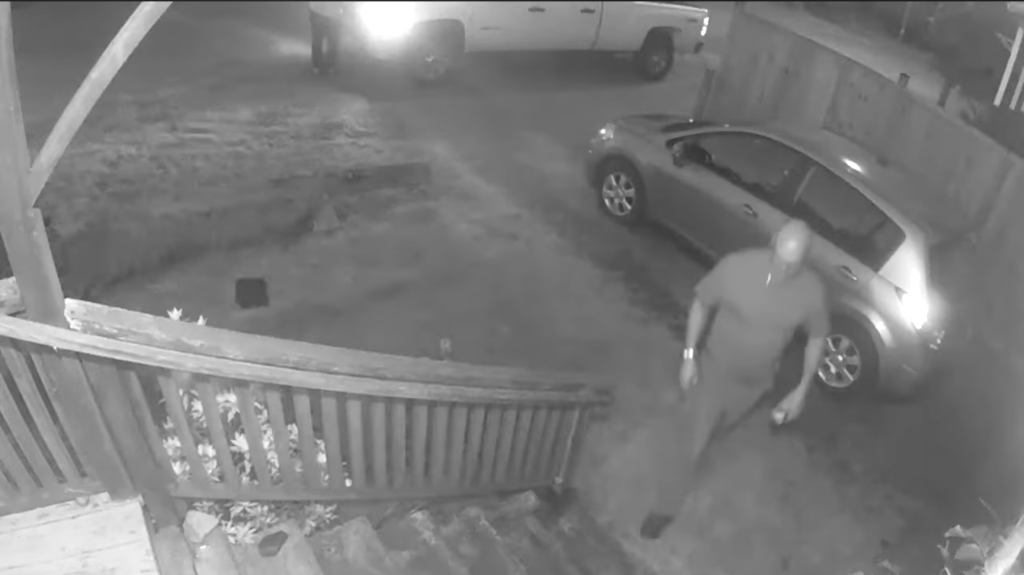
What happened on this occasion is that Mary Reynolds flew her minidrone over a shipbreaking operation and published recordings of the drone flights online. This prompted the owner and operator of the shipbreaking operation to steal her drone, intimidate her and follow her home in his truck.
When things reached a critical threshold, we commenced a lawsuit for the theft of the drone and intimidation. The response by the company and the owner was overly aggressive. They made the mistake of attempting to suppress Mary Reynold’s right to free expression, which brought the Protection of Public Participation Act into play.
I’m pretty confident the defendants could have apologized for stealing her drone and settled the drone theft and intimidation case for a reasonable amount very early on, but they responded with a very aggressive counterclaim, suing her for trespassing into their airspace and nuisance and invasion of their employees privacy. In the end, they were forced to apologize and walk back their aggression.
Can you give me a bit of background about why this case was important for you and why you took it on?
I believe strongly that the right to free expression is foundational to democracy and provides fundamental institutional support for other rights including environmental rights. This case is a textbook example of that.
On that note, this is a pretty big moment in Anti-SLAPP legislation. Can you share a bit about this outcome and what it means for the importance of people exercising their rights?
There are many cases that demonstrate the importance of the Protection of Public Participation Act, and Premier Eby deserves credit for enacting that legislation. The message is out that the civil courts should not be used to suppress the right to free expression unless there is a solid overriding reason to do so.
Why is this case important for community members in Union Bay?
Government Institutions including the Minister of Environment cannot function alone. They rely on an able and informed citizenry to tell investigators about environmental problems, lodge complaints and spread the word about corporate misconduct so that the government is informed about what’s going on.
Mary Reynolds flew her drone to gather evidence of environmental misconduct by Deep Water Recovery. She published her videos online, and those videos were distributed to the Ministry of Environment, Fisheries and Oceans Canada, the Comox Valley Regional District and K’ómoks First Nation.
If she hadn’t been able to do that, the province would not have been able to enforce the Environmental Management Act in the way that they did. The Comox Valley Regional District would not be aware of zoning infractions, and the federal government would not have been aware of spillage into fish-bearing waters.
Do you think the video evidence stood well for her in court?
Video tends to show things as they are, rather than as they ought to be. The drone provided sufficient objective coverage for any viewer to see what was going on, including wastewater runoff, the use of straw bales to hold the water back, dismantling barges and ships on permeable ground rather than the asphalt surfaces, the lack of treatment facilities, digging up more sensitive areas of the property and employees living at an industrial zone. None of that would have been apparent to people driving by the facility.
The case was three years long, can you share some big behind-the-scenes moments? Is there anything else you would like to add?
I love working with Mary Reynolds because I’m a proponent of free expression and she’s one of the rare people in Canada who will make full use of her right to free expression all the way to the edges of that right. Not everyone will take the social and legal risks of speaking their mind. Mary, if she sees something happening that she finds inappropriate, she’ll communicate that to others.
It’s a joy to be able to support people like Mary Reynolds because in many ways they are the true engine of social progress.
 allthingsunionbay
Great Work … Madeline Dunnett/ Jason Gratl …!!
The Last Two Lines of this Message sums it up from ”ALL” of us so very well.
WE ALL OWE MARY R. OUR SPECIAL THANKS, AND SUPPORT
FOR ALL SHE DOES, AND HAS ”SUFFERED” FOR US.
(And, for Future Generations to come!)
MAKE D.W.R./U.B.INDUSTRIES …HISTORY….now…!!!
”YES WE CAN”
LikeLiked by 1 person